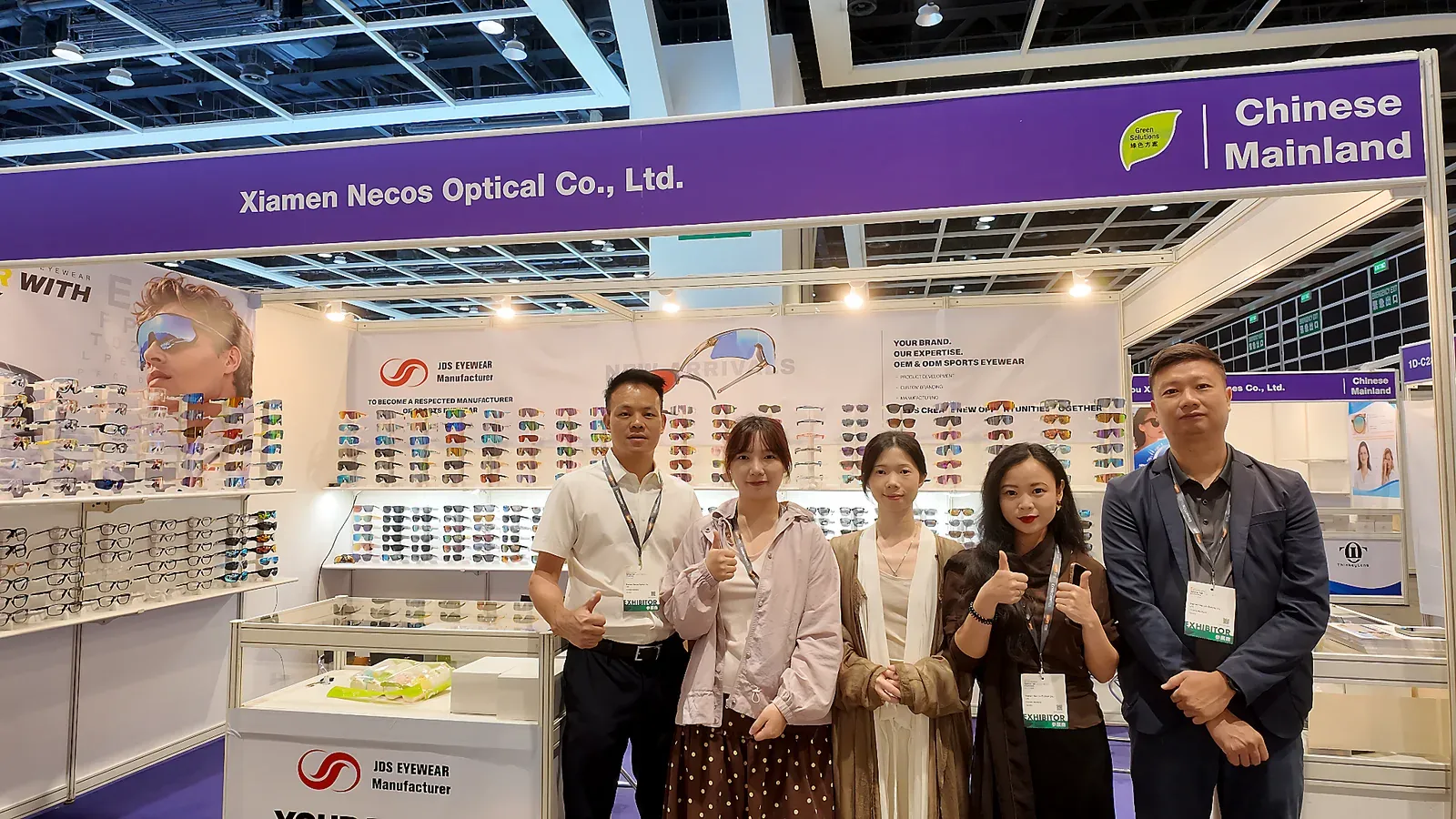
The 34th HKTDC Hong Kong International Optical Fair took place from November 4–6, 2026, at the Hong Kong Convention and Exhibition Centre (HKCEC). Organized by the Hong Kong Trade Development Council (HKTDC) and co-organized by the Hong Kong Optical Manufacturers Association (HKOMA), the three-day exhibition attracted approximately 12,000 buyers from 101 countries and regions.
Under the theme “Bright Eyes • New Horizons,” this year’s exhibition highlighted developments in fashion eyewear, smart technology, vision care, and specialized eyewear applications. Products ranged from AI-enabled smart glasses to sports sunglasses designed for specific activities such as pickleball.
JDS EYEWEAR participated at Booth 1D-D23, presenting its latest sports eyewear developments for the second half of 2026 and meeting buyers from different international markets. Conversations with invited customers also provided first-hand insights into regional product preferences and the challenges buyers face when developing customized eyewear.
1. JDS EYEWEAR at Hong Kong Optical Fair 2026
During the three-day exhibition, our team focused on three activities: customer meetings, industry observation, and new product presentations.
Customer Meetings and Project Discussions
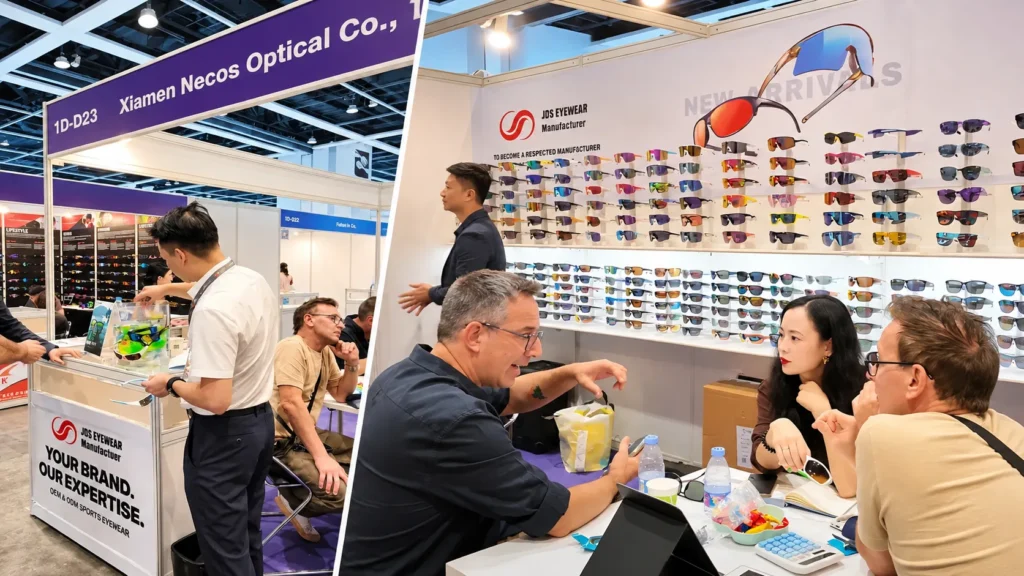
We invited customers to discuss ongoing orders, upcoming projects, product selection, and customization requirements.
These conversations covered frame designs, lens options, wearing comfort, and functional requirements for different markets. They also helped us understand which product features buyers prioritize when selecting new collections.
Industry Observation and Product Research
We visited other eyewear brands and exhibitors to examine new frame designs, lens technologies, manufacturing developments, and emerging product applications.
One notable observation was the growing attention to specialized eyewear. Alongside smart glasses and vision-care products, the exhibition also featured sports sunglasses developed specifically for pickleball players.
For JDS, these developments provided references for evaluating future product opportunities, particularly in sports-specific designs, functional lens construction, and adjustable fitting systems.
Showcasing Our 2026 Second-Half Collections
JDS presented four main product developments:
- KW Series: Sports sunglasses featuring a colored coating layer embedded within the lens structure, TAC polarized lenses, and selected adjustable fitting features.
- KV Series: Fashion-oriented fishing sunglasses combining TR90 frames, TAC polarized lenses, and cat-eye styling.
- KN Series: Selected adjustable and lightweight cycling sunglasses featuring different nose pad, temple, and prescription insert configurations.
- PH Photochromic Series: Featuring photochromic sports eyewear. For example, the KC04-11-PH cycling sunglasses feature PC lenses, three-position adjustable nose pads, and an optional prescription insert.
These collections address different product requirements, from lens construction and adjustable fit to fashion-oriented outdoor eyewear and prescription-compatible sports sunglasses.
2. What Buyer Conversations Revealed About Changing Eyewear Preferences
Two customer discussions provided particularly useful insights into regional product selection. Rather than relying exclusively on general market assumptions, these observations came from actual product selection discussions during the exhibition.
2.1 South Korea: Interest in Bright Translucent Frame Colors
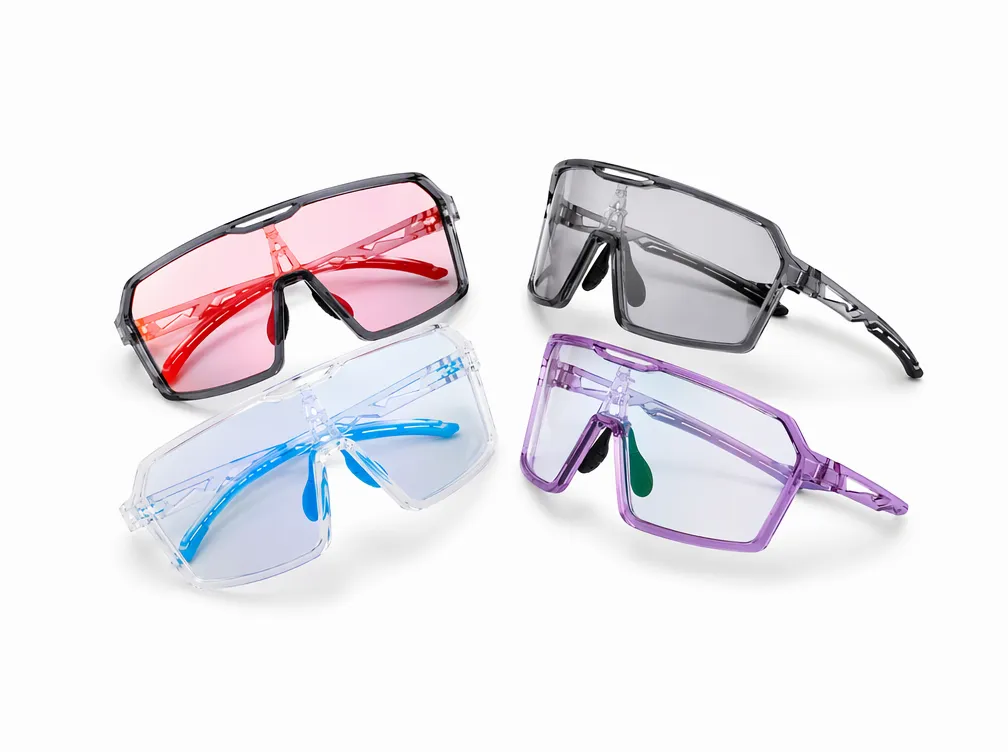
During a product selection discussion with an invited South Korean buyer, most of the selected styles featured brightly colored translucent frames.
The buyer also explained that bright translucent designs had recently become popular in the Korean market.
For brands developing collections for South Korea, this feedback suggests an opportunity to explore colorful transparent frames alongside conventional solid-color designs.
From a manufacturing perspective, translucent materials require particular attention to:
- Material clarity: Maintaining consistent transparency without visible imperfections.
- Color consistency: Avoiding noticeable differences between production batches.
- Surface quality: Controlling visible flow marks, bubbles, and surface defects.
- Color coordination: Matching frame finishes with lens tints.
Because material imperfections and uneven coloration can be more visible through transparent frames, buyers should evaluate physical samples under consistent lighting conditions before confirming production requirements.
2.2 The Philippines: A Preference for Slimmer Temple Designs
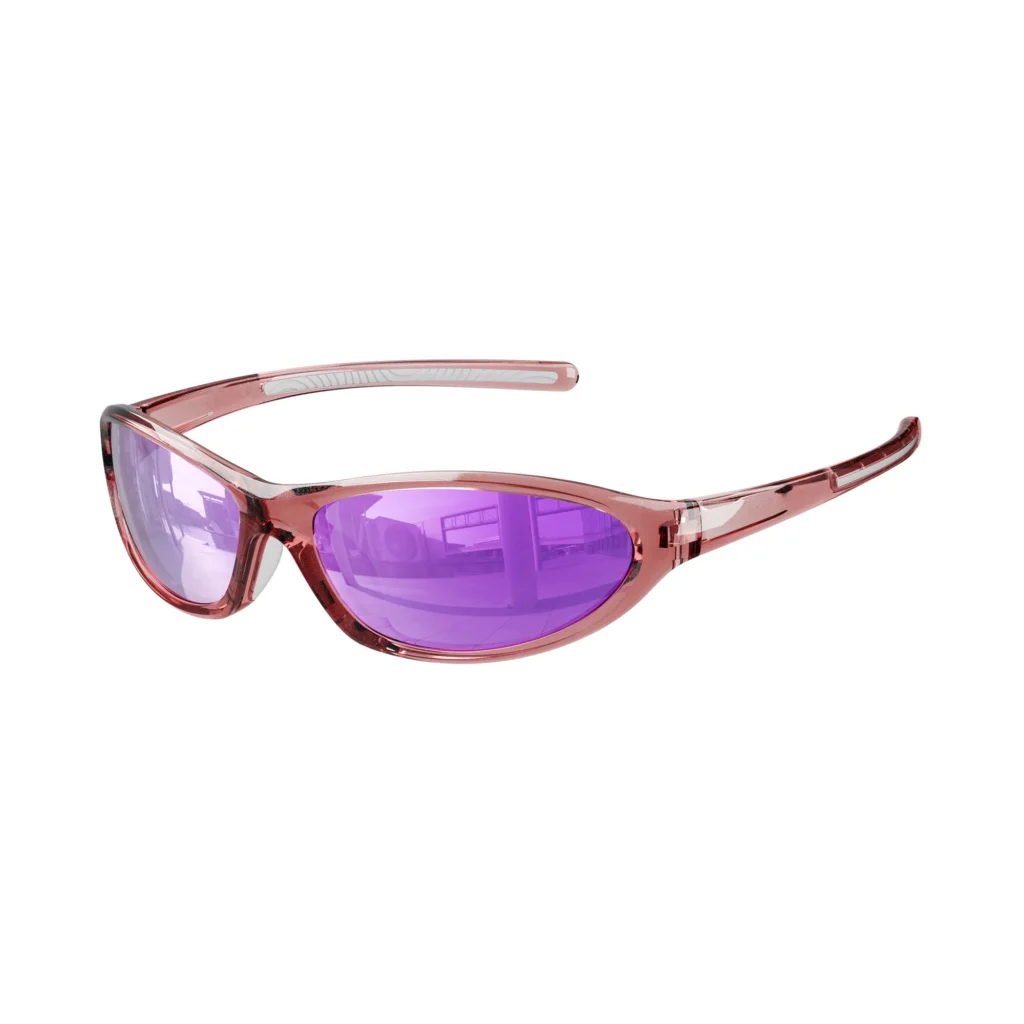
A Philippine buyer specifically requested slimmer temple designs when we recommended different sports sunglasses. The buyer explained that wide temples were not preferred and that slimmer styles were more common in their local market.
This feedback highlighted the importance of considering local product preferences when selecting frame structures.
For sports eyewear, temple design also affects practical considerations such as:
- Compatibility with cycling helmets and other accessories.
- Contact pressure around the ears.
- Overall frame weight and wearing comfort.
- Structural strength and stability.
Slimmer temples can offer a less visually dominant profile, but reducing their thickness requires careful consideration of material strength and structural stability. These factors should be evaluated alongside the intended application and target users.
2.3 A Broader Challenge: Differentiated Products Without Excessive Development Costs
Across our exhibition discussions, buyers repeatedly raised three barriers associated with traditional eyewear customization:
- High mold development costs.
- Lengthy development and sampling cycles.
- High minimum order quantities.
Our discussions also reflected a changing buyer base, with more emerging eyewear brands seeking differentiated products while managing initial development costs and inventory risks.
For these businesses, the challenge is not simply paying for customization. It is committing capital and inventory before obtaining sufficient market feedback to validate a new product.
Traditional development arrangements may require buyers to invest in new molds, complete multiple rounds of sampling, and accept large initial orders before knowing how the product will perform commercially.
If the first collection does not meet market expectations, the investment may delay or discourage subsequent product development.
This creates a particular challenge for emerging brands and buyers testing new market opportunities, making flexible development arrangements an important consideration when choosing a manufacturing partner.
3. JDS Product Innovations: Lens Technology and Functional Eyewear
3.1 KW Series: Embedded Colored Coating and Polarized Lens Construction
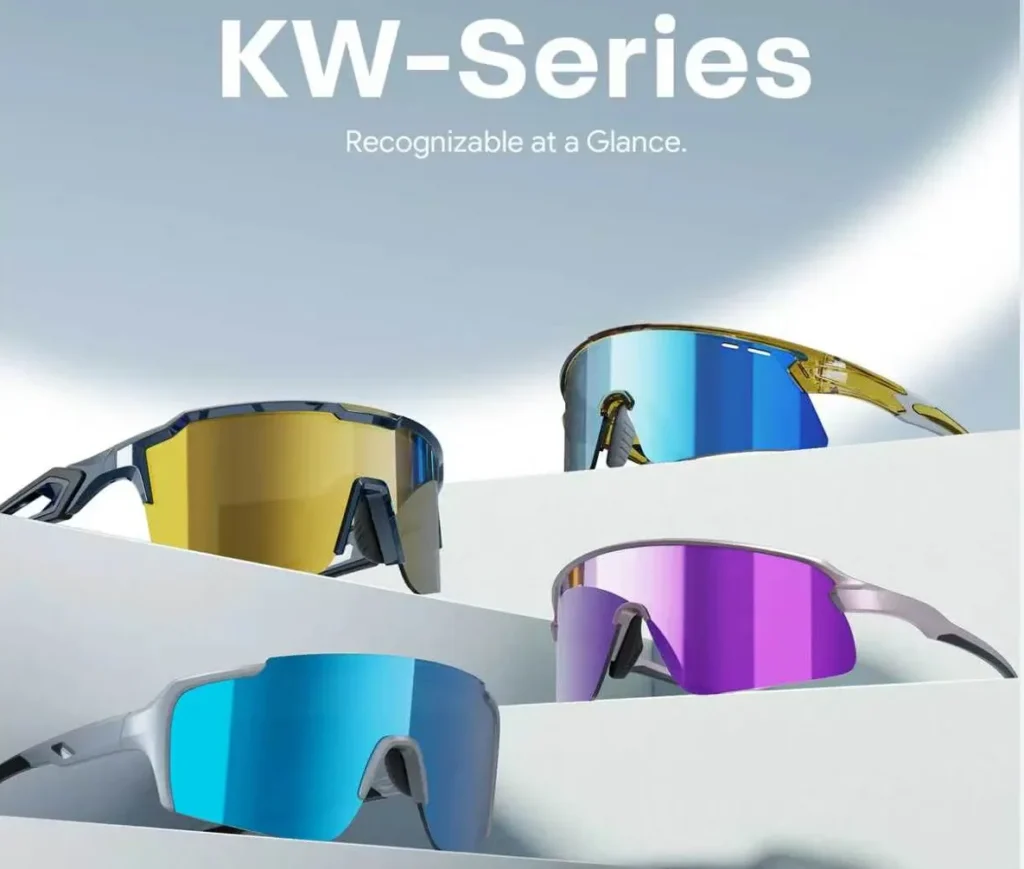
The KW series features a colored lens coating structure that differs from conventional designs where the colored layer is positioned directly on the outermost lens surface.
In the KW construction, the colored coating layer is embedded within the lens structure, with the colored film positioned in the core layer rather than directly exposed on the outer surface.
The series also features one-piece TAC polarized lenses designed to reduce glare from reflective surfaces such as roads and water.
The collection offers several frame and fitting configurations:
Frame Construction
- KW02-02-C4, KW03-03-C3 and KW09-17-C4: TR90 frames with metallic-lacquer finishes.
- KW05-05-C3 and KW07-07: Lightweight TR90 frame configurations.
Nose Pad and Temple Configurations
- KW02-02: Rubber nose pads and adjustable anti-slip temples.
- KW03-03: Silicone nose pads and rubber temple components.
- KW05-05: Air-cushion nose pads designed to provide a softer contact point on the nose bridge.
- KW07-07: Three-position temples with vertical tilt adjustment.
- KW09-17: Rubber nose pads and anti-slip rubber temple tips.
Selected models also feature anti-slip rubber temple components produced using a dual-injection molding process to enhance grip.
For buyers developing sports sunglasses and cycling collections, the KW series provides different combinations of lens construction, frame finishing, and fitting features.
3.2 KV Series: Fashion-Oriented Fishing Sunglasses
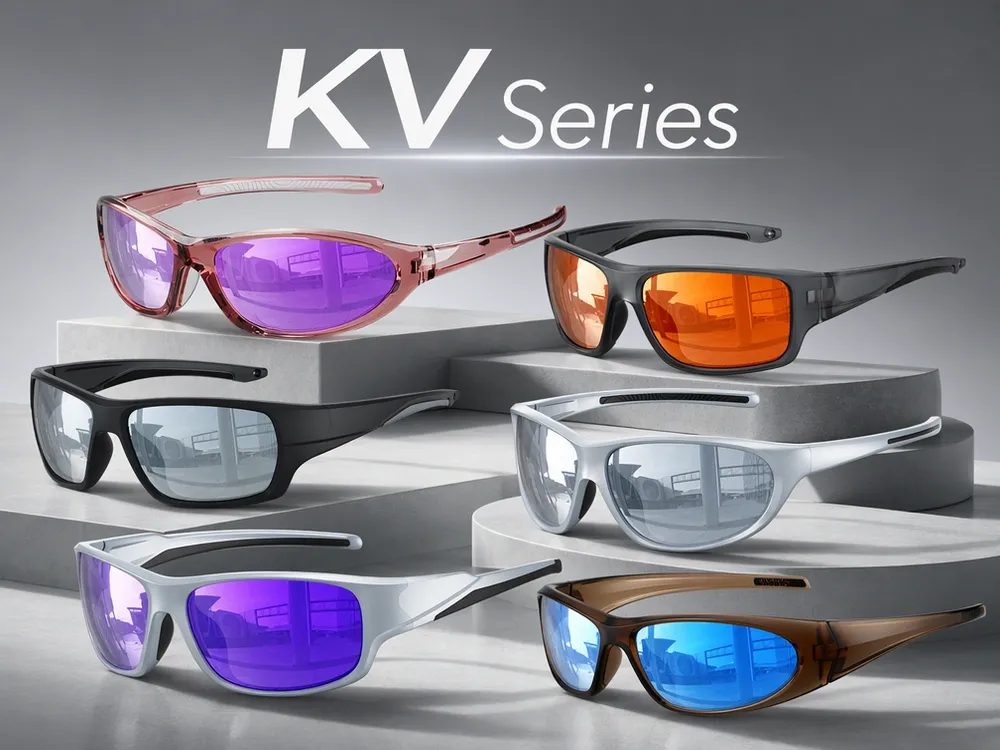
The KV series approaches fishing eyewear from a different design direction.
Rather than focusing exclusively on conventional sports styling, the collection combines TAC polarized lenses with TR90 cat-eye frames, offering a more fashion-oriented appearance.
Its main features include:
- TAC polarized lenses: Designed to reduce reflected glare from water and other outdoor surfaces.
- TR90 frames: Lightweight and flexible construction.
- Cat-eye styling: A distinctive frame shape extending beyond traditional fishing eyewear designs.
- Multiple nose pad configurations: Different models use integrated or soft rubber nose pads.
- Anti-slip temple structures: Selected configurations provide additional grip during outdoor activities.
The individual models offer different structural details:
KV10-16 and KV10-17
These models feature integrated nose pads and anti-slip temple tips.
KV03-03 and KV06-08
These models use soft rubber nose pads and anti-slip temple structures.
The collection is designed for fishing, coastal leisure, urban driving, and daily commuting.
For eyewear brands and distributors, this provides an opportunity to develop fishing sunglasses with a more fashion-oriented appearance while retaining polarized lens functionality.
3.3 KN Series: Adjustable Cycling Sunglasses for Different Facial Structures
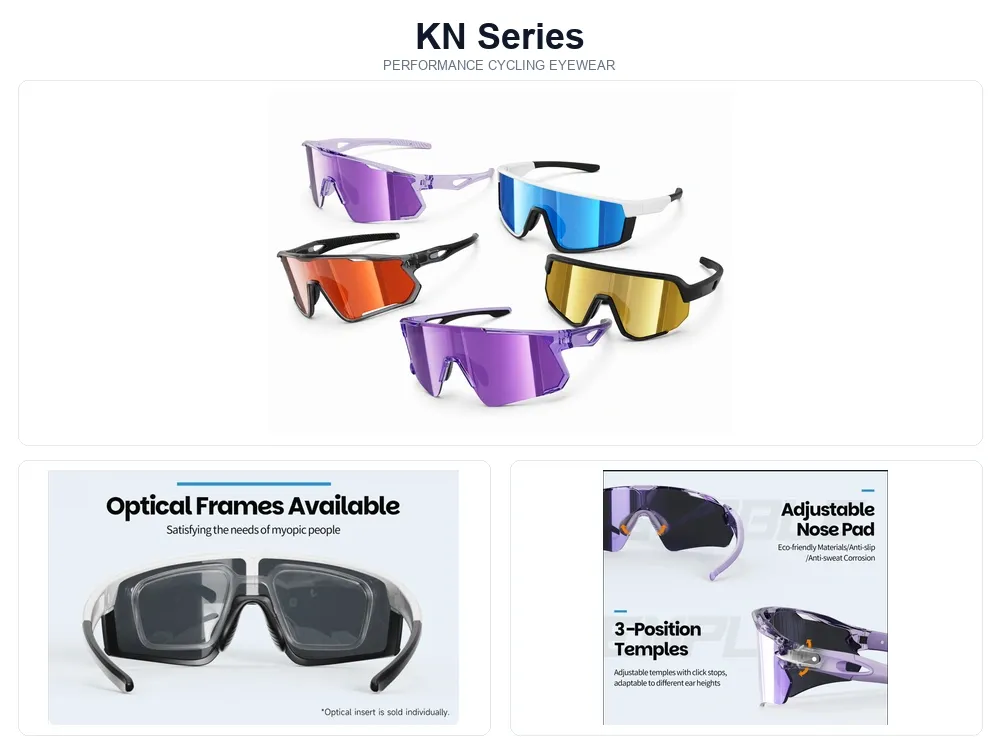
Fixed nose support positions and temple geometries do not necessarily provide the same fit for users with different facial proportions.
The KN series offers selected lightweight cycling sunglasses with adjustable components to provide additional fitting options.
Three-Position Adjustable Temples
KN-Y332 and KN-Y333 feature three-position adjustable temples with click-stop structures.
This allows the temple angle to be adjusted to accommodate different ear heights and modify lens positioning.
Adjustable Nose Pads
Selected KN models feature adjustable nose pads to accommodate different nose bridge heights:
- KN-Y330, KN-Y332, KN-Y333 and KN-Y335: Two-position adjustable nose pads.
- KN-Y338 and KN-Y339: Adjustable nose pads.
Adjustable Temple Tips
Selected models feature adjustable temple tips that can be shaped around the ears for a more secure fit.
The documented models include KN17-25, KN17-26, KN-Y330, and KN-Y335.
Other configurations use rubber-wrapped temple structures to provide additional grip.
Prescription Insert Compatibility
Selected KN models support an additional optical insert for prescription lenses.
The compatible models listed in the product documentation include:
KN-Y262, KN-Y263, KN15-22, KN-Y330, KN-Y335, KN-Y338, and KN-Y339.
The optical insert is an optional accessory. Availability and pricing should be confirmed according to the specific order requirements.
These different configurations allow buyers to select cycling eyewear based on their preferred combination of nose adjustment, temple positioning, anti-slip features, and prescription requirements.
3.4 PH Photochromic Series: KC04-11-PH Cycling Sunglasses
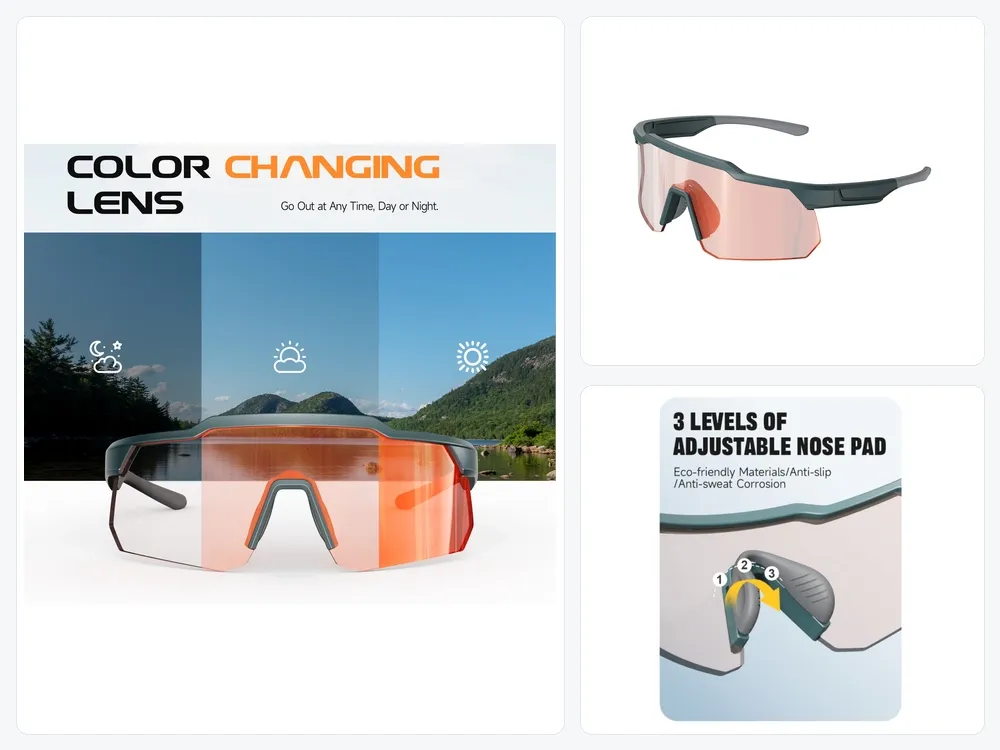
The PH Photochromic Series includes sports eyewear designed for outdoor activities in changing light conditions. One of the models in this series is the KC04-11-PH cycling sunglasses, featuring photochromic PC lenses and adjustable fitting features.
Unlike conventional fixed-tint sunglasses, photochromic lenses change their tint in response to light exposure, offering an alternative for users moving between different lighting environments.
The KC04-11-PH model features the following specifications:
| Feature | KC04-11-PH |
|---|---|
| Frame material | TR90 |
| Lens material | PC |
| Frame design | Semi-rimless |
| Product weight | Approximately 34g |
| Lens function | Photochromic |
| Nose pads | Three-position adjustable |
| Prescription option | Optional optical insert |
The one-piece PC lens combines lightweight construction with impact-resistant material characteristics.
The three-position adjustable nose pad provides additional fitting options for different nose bridge heights.
An optional prescription optical insert is also available. Availability and pricing are confirmed according to the specific order requirements.
For brands developing cycling and outdoor sports eyewear collections, the KC04-11-PH combines photochromic functionality, adjustable fitting, and prescription compatibility in one product configuration.
4. How JDS Makes Sports Sunglasses OEM/ODM Customization More Flexible
Traditional eyewear development can involve mold investment, engineering work, prototype production, and multiple rounds of revisions.
JDS supports two main development approaches:
- ODM customization: Buyers select JDS-developed designs and customize them according to their branding and product requirements.
- OEM development: Buyers provide their own designs or specifications for product development and manufacturing.
To make product development more accessible, JDS offers several options according to the buyer’s requirements and customization scope.
4.1 JDS-Developed Designs and Existing-Model Modifications
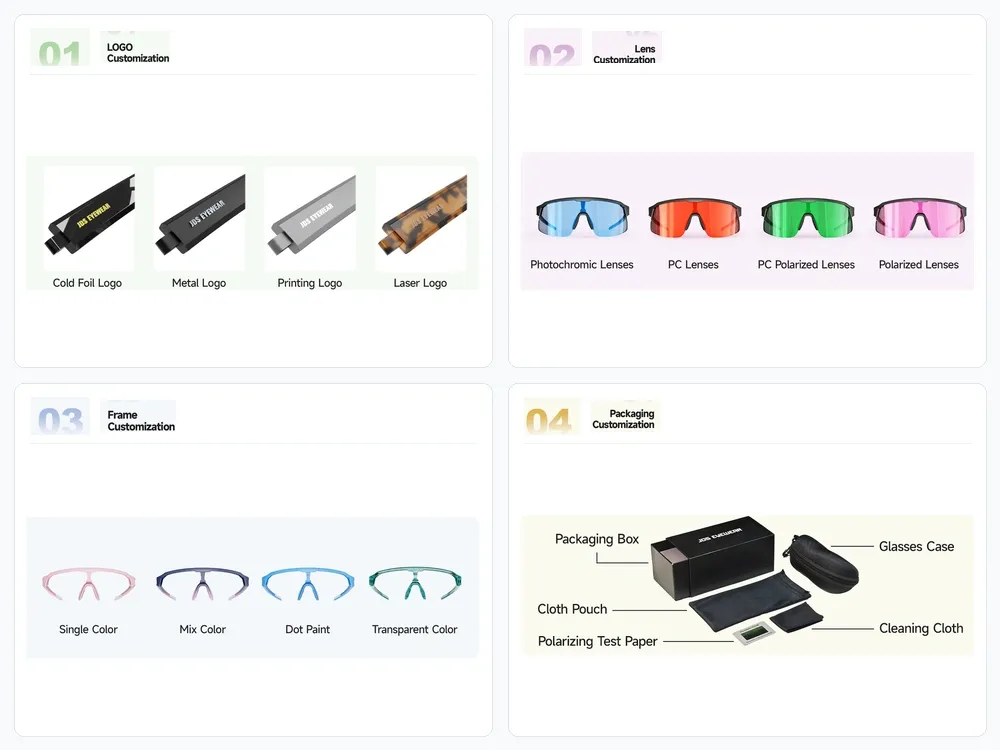
JDS develops its own eyewear designs and takes responsibility for the initial development investment in its collections.
Instead of starting every project with a completely new frame, customers can evaluate selected existing designs and discuss modifications based on technical feasibility.
Potential customization options include:
- Frame colors and color combinations.
- Logo placement and branding details.
- Available lens colors and functional options.
- Selected frame and temple design modifications.
Logo placement, selected colors, and available lens options can generally be evaluated within existing product configurations. Structural modifications may require additional engineering, sampling, or tooling.
This approach gives buyers an alternative to full new-frame development when their requirements can be met through existing designs.
4.2 Ready-Stock Options for Earlier Sample Evaluation
JDS provides ready-stock options for selected popular styles and market-trend designs.
Buyers can order available ready-stock products from as little as one piece, allowing them to evaluate frame appearance, lens finishes, materials, and functional features before committing to larger orders.
Product availability depends on the selected model and current inventory. Buyers should confirm stock availability before placing an order.
4.3 Small-Batch Customization for Private-Label Projects
JDS supports small-batch customization for selected existing eyewear models, with a minimum order quantity starting from 50 pairs per color.
This arrangement allows brands to add their own logos to selected styles and introduce new products without immediately committing to the larger quantities associated with standard OEM development.
The 50-pair minimum applies to eligible small-batch customization projects using existing models. Structural modifications and new frame development require separate technical evaluation and follow the applicable OEM development MOQ.
4.4 Choosing the Right OEM/ODM Development Approach
The appropriate development route depends on the buyer’s product requirements and the level of customization involved.
| Buyer Situation | Recommended Approach | Reference MOQ / Conditions |
|---|---|---|
| Evaluating available products before a larger order | Ready-stock purchase | From 1 piece, subject to stock availability |
| Launching a private-label collection using an existing JDS design | Small-batch customization | From 50 pairs per color for eligible projects |
| Modifying an existing design beyond standard customization | ODM customization | Subject to technical evaluation and applicable MOQ |
| Developing according to customer-provided designs or specifications | Standard OEM development | Reference MOQ: 300 pairs per color |
These figures are reference conditions, not universal guarantees. Final MOQ requirements depend on the selected model, materials, customization scope, and project specifications.
For buyers testing a new market, purchasing ready-stock products or starting with eligible small-batch customization can provide a practical way to evaluate demand before investing in more extensive product development.
Projects involving new frame structures or substantial design changes require separate technical evaluation and standard OEM arrangements.
5. Discuss Your Eyewear Project with JDS EYEWEAR
If you are planning a new eyewear collection or looking for a manufacturing partner, contact JDS EYEWEAR to discuss your project.
Share your target market, product requirements, and estimated order quantity with our team. We will help you evaluate suitable development options and discuss the next steps based on your business needs.
Contact JDS EYEWEAR to discuss your next project.